History
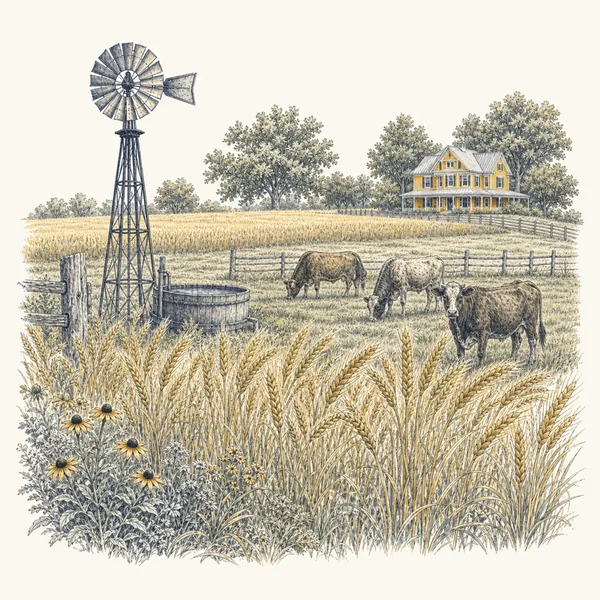
How Harvest became Harvest.
Before Harvest
Before Harvest had pools, schools, sidewalks, or thousands of houses, much of this corner of Denton County was open farmland.
1877: The Faught family arrives
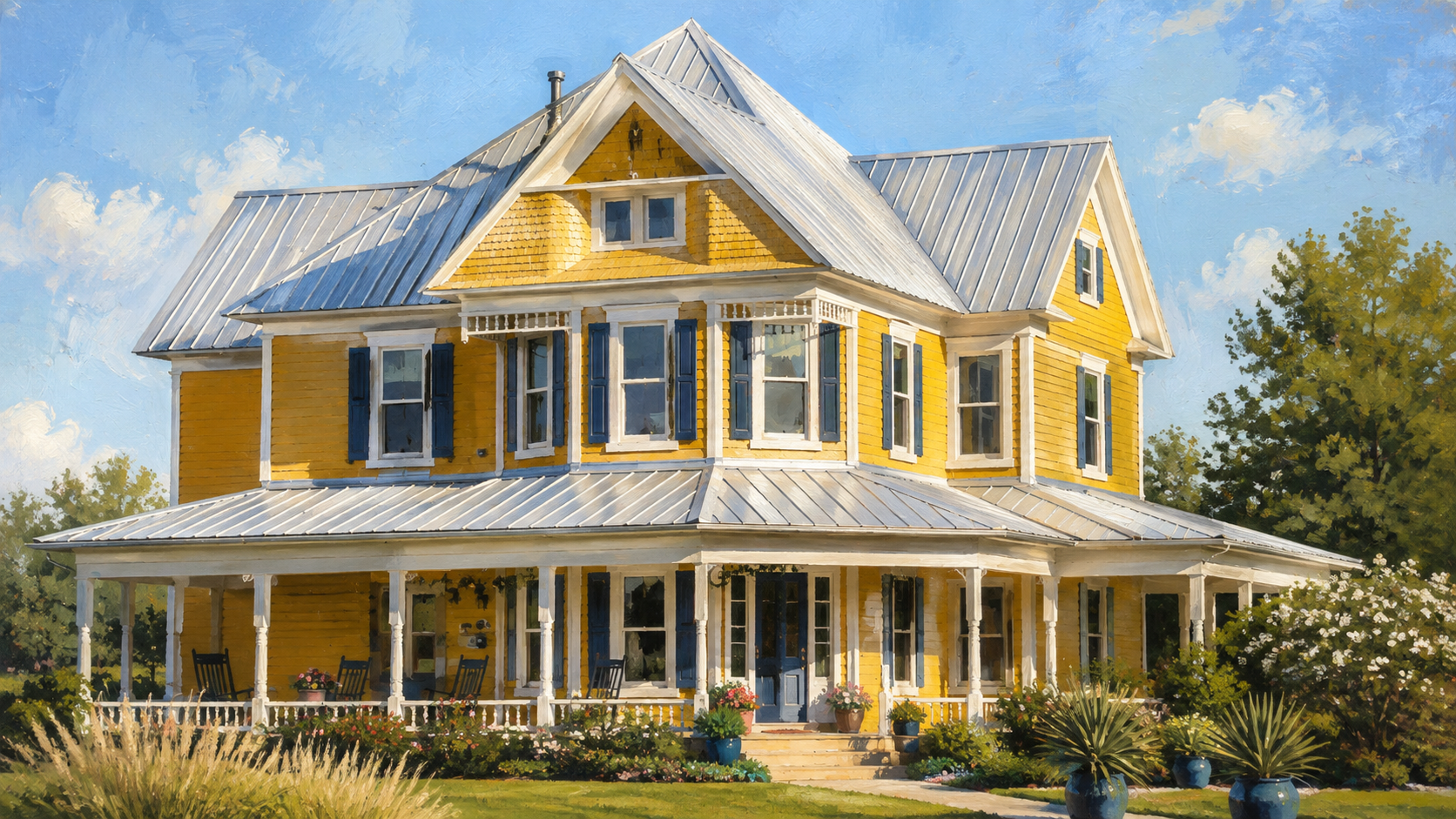
John Wesley Faught was 23 when he came to North Texas from Tennessee with his wife, Etta, and their young child. They traveled by train to Fort Worth and finished the trip into Denton County by wagon.
A history written while John Wesley was still alive says the family first rented a farm. The following year, he bought 70 acres for $6 an acre, paying cash and leaving himself 35 cents. He raised grain and cattle and bought more land as the farm succeeded. Eventually, his farm covered about 275 acres.
The Faught family stayed on the land for generations. John and Etta's son Edward Miller Faught eventually managed the homestead. Miller and his son John Donald later bought the interests of other family members, keeping the farm together. A Northlake history based on accounts from Faught descendants says the family eventually held about 290 acres here and that the property remained in the family until 2005.
There is one small historical mystery. Harvest's current materials date the house to 1882, while a biographical history published during John Wesley Faught's lifetime says his larger two-story home was built in 1900. The house is unquestionably part of the Faught homestead, but the sources do not agree on its exact construction year.
2005–2006: The farm becomes development land
After more than a century, the Faught property left the family.
By 2006, companies connected to Realty Capital controlled major tracts of what would become the development. In November 2006, Realty Capital Belmont signed a development agreement with the Town of Northlake. County land records also show Realty Capital Argyle 114 holding land on the future Harvest site that year.
The community was not called Harvest yet. It was Belmont.
2007: The Belmont districts are created
The two Belmont Fresh Water Supply Districts came before Hillwood.
Denton County created Belmont FWSD 1 on July 24, 2007 and Belmont FWSD 2 on August 14, 2007. Voters later gave the districts road and sewer powers.
These districts were part of the machinery needed to turn rural land into a large neighborhood. They could build and finance roads, drainage, utilities, and other public infrastructure, then repay that infrastructure through district taxes and bonds.
This is why Harvest still has Belmont District 1 and District 2 today. They were not added after the neighborhood was built. They were part of the plan for developing the land.
2011–2012: Hillwood enters the picture
Realty Capital had the land and the early development framework. Then Hillwood Communities joined the project.
Harvest says the partnership began in 2011. Hillwood publicly announced the joint venture with Realty Capital in January 2012. At the time, the project was still called Belmont and was planned as roughly 1,000 acres with about 2,500 homes and a large mixed-use area.
During 2012, the idea changed into something more distinctive.
Hillwood studied other farming-centered communities and decided to build the old agricultural history into the new neighborhood. The plan included a working farm, resident garden plots, trails, a lake, gathering spaces, and the old Faught farmhouse.
And Belmont got a new name: Harvest.
November 2012: Harvest breaks ground
Ross Perot Sr. climbed into a truck and helped move the old Faught farmhouse across the property.
The house was saved and restored instead of demolished. Around it, Hillwood began building the first phase of Harvest: 323 homes, Harvest Lake, pools, trails, parks, a community farm, and gathering spaces.
The land that had grown grain and cattle would keep farming, although now it would be surrounded by houses.
2013–2014: The first neighbors arrive
Harvest opened around 2013, with its first homes filling during 2013 and 2014. The original plan called for roughly 3,000 homes.
The farm became more than decoration. Harvest brought in a professional farmer to grow food and teach residents. Early plans included community gardens and a greenhouse, and produce from the farm was donated to the North Texas Food Bank.
Harvest became one of the early large-scale agrihoods in the country and one of the first in Texas.
2017–2026: The old farmhouse gets another life
The Faught farmhouse became Farmhouse Coffee & Treasures in 2017.
More than a century after the Faught family gathered there, people living in the subdivision built on the family's former farmland could walk over and have coffee inside the old house.
Farmhouse Coffee & Treasures closed in July 2026 after nine years. On August 25, Harvest announced Denton County Brewing Company as the Farmhouse's next food-and-beverage partner, with an opening planned for fall 2026.
Harvest says the next chapter is intended to keep the Farmhouse as a community gathering place, with coffee, food, locally crafted beverages, live entertainment and community programs. The exact opening date and operating details have not yet been posted.
Harvest keeps growing
Today's Harvest is larger than the community originally announced in 2012.
Hillwood says four later land acquisitions expanded the plan from about 3,000 homes to more than 4,000. Modern public bond documents describe Harvest as roughly 1,250 acres, split between Belmont Districts 1 and 2.
That is also why the Faught story needs a little qualification. Their farm is the historic heart of Harvest, but the entire modern 1,200-plus-acre community was not one Faught farm. Harvest grew outward as more land was added.
Today
What began as farmland became a development called Belmont, then became Harvest.
The old pieces are still scattered through the new ones. The Faught farmhouse survived. Farming became part of the neighborhood's design. The name Belmont survived in the two government districts created before Harvest existed. And the roads, taxes, utilities, HOA, schools, parks, and police arrangements residents deal with today grew out of decisions made during different stages of that development.
Harvest looks like one neighborhood on a map. Its history explains why it is governed like several.